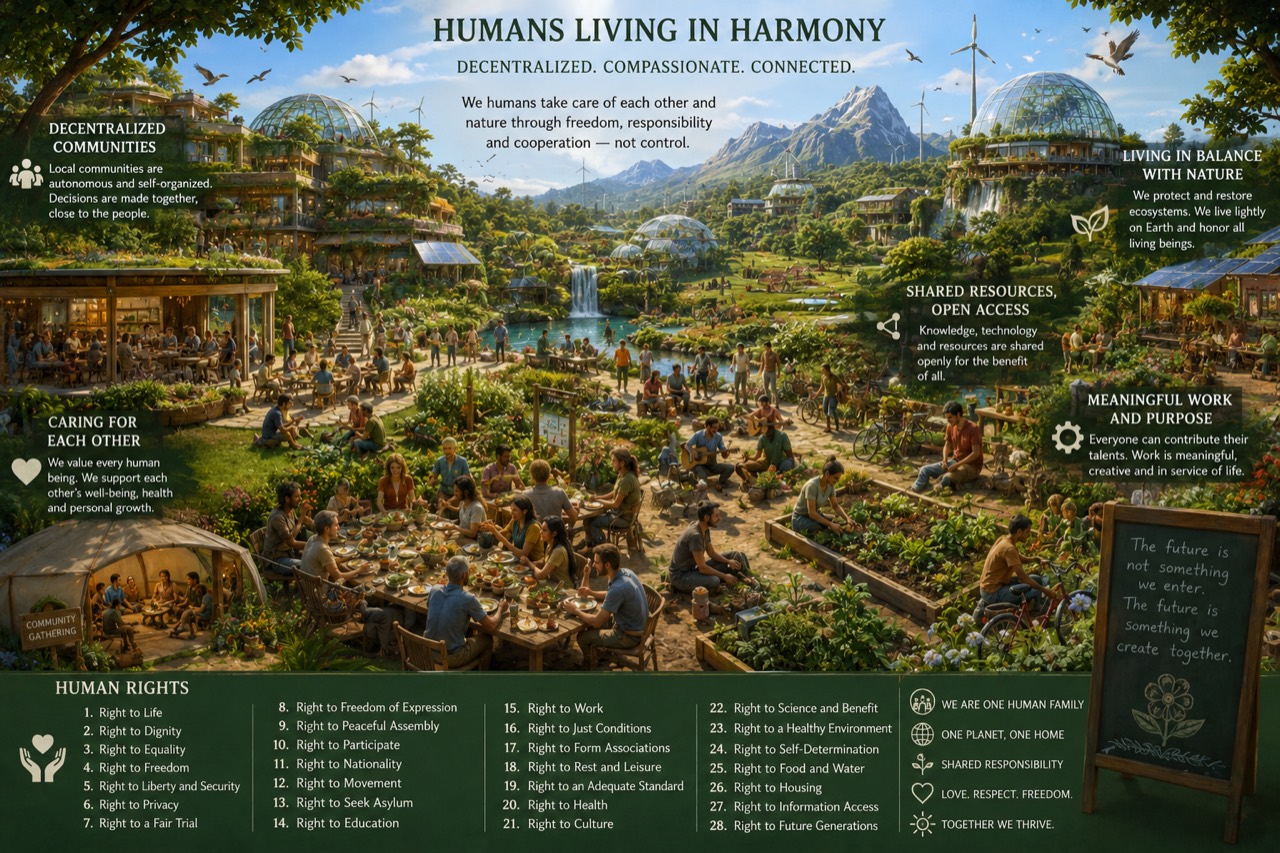
Would more social societies be better? They could be, if the purpose of society were made explicit: not endless economic expansion, but the well-being and quality of life of humans, sentient beings, and the environment that sustains them.
A social society in this sense is not simply a larger state or a heavier bureaucracy. It is a civilization that treats security, health, housing, education, food, clean water, meaningful work, and ecological stability as foundations of freedom. It measures success less by gross domestic product and more by whether lives can flourish without being trapped in fear, exhaustion, or preventable deprivation.
Well-being beyond GDP
When survival is permanently uncertain, people are pushed into narrow and defensive ways of living. Poverty, medical debt, homelessness, and constant insecurity produce chronic stress. That stress does not stay private. It weakens trust, damages mental health, narrows attention, and makes communities more reactive.
A stronger social foundation changes the emotional weather of a society. People with real security have more room for agency, caregiving, study, creativity, civic participation, and repair. The point is not to remove responsibility from life. The point is to stop confusing human dignity with the threat of abandonment.
Technology as shared capacity
Technological acceleration changes the old argument about welfare and labor. Artificial intelligence, automation, robotics, medical technology, clean energy, and advanced infrastructure can produce abundance with less compulsory human labor. If that productivity is shared, survival can be partly decoupled from employment.
Universal basic services, public digital infrastructure, shorter work weeks, or shared dividends from automated production become practical ways to distribute the gains. Technology can also help with demographic pressure: elder-care support, accessible transport, automated public maintenance, and better health systems can reduce the burden on human caregivers without reducing care itself.
The moral question is ownership. If the machines, models, platforms, data, and energy systems are controlled only by concentrated private power, automation can deepen inequality. If they are governed as shared social infrastructure, they can expand freedom and time.
Humans, sentient beings, and Earth
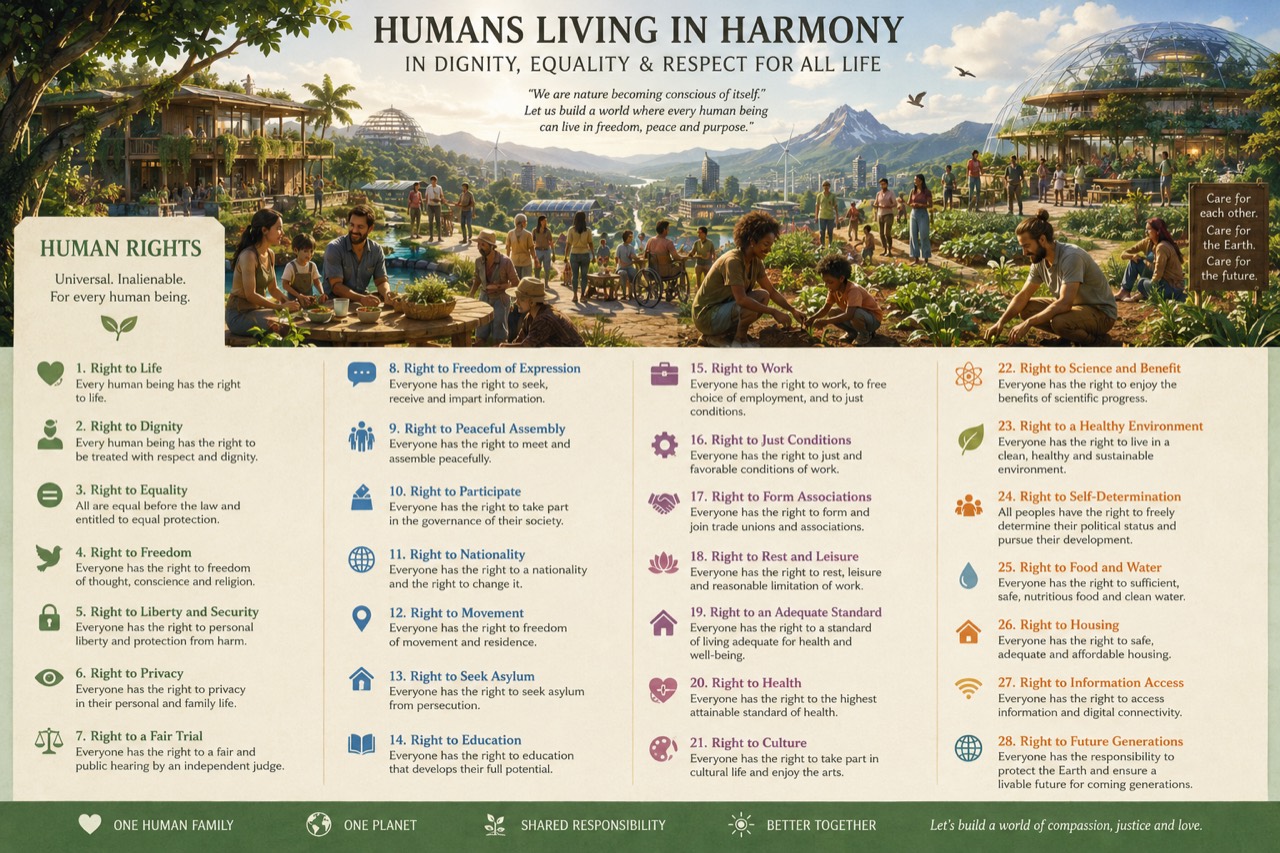
A well-being society cannot stop at human comfort. It must also ask what our comfort costs other sentient beings and ecological systems. Industrial animal agriculture, habitat destruction, pollution, and climate instability are not side effects outside the moral field. They are central tests of whether a society is actually humane.
Technology can help here, too, when it is guided by ecological limits: cellular agriculture, precision fermentation, plant-based foods, habitat monitoring, circular manufacturing, renewable energy, and restoration tools can reduce suffering while freeing land and resources for rewilding, carbon storage, and biodiversity.
In the present food system, technology can also improve livestock management and animal well-being. Better sensors, veterinary diagnostics, welfare auditing, low-stress handling systems, pasture mapping, heat-stress alerts, and traceable supply chains can make care more responsive and reduce neglect, crowding, illness, and avoidable suffering. These tools should not become an excuse to preserve harmful systems unchanged. At their best, they help animals live with more space, health, social contact, and protection while society also develops alternatives that reduce dependence on industrial animal agriculture.
| Old measure | Well-being measure |
|---|---|
| Growth for its own sake | Health, dignity, time, trust, and ecological stability |
| Work as survival pressure | Work as contribution, care, creativity, and restoration |
| Technology as private extraction | Technology as shared capacity within planetary boundaries |
More social societies would be better only if they are also more democratic, ecological, compassionate, and technologically wise. The goal is not control. The goal is a civilization where technology reduces fear, frees time, protects the vulnerable, respects sentient life, and helps humanity live as part of the Earth rather than above it.