Can ecocentrism be combined with valuing sentient beings and probably trees? Yes. In fact, combining ecocentrism with a deep valuation of sentient beings and trees creates a richer ecological philosophy than either view can offer alone.
Classic ecocentrism looks at the big picture: the health of the whole system, the water cycle, the soil, the habitat, and the relationships that keep life going. Critics have sometimes argued that this can feel cold or abstract, as if individual animals or trees were only faceless components of an ecosystem.
A more compassionate ecological view keeps the system-wide concern, but adds explicit respect for individual sentient lives and the unique presence of trees. It can be thought of as a deep green ethic, or as a kind of sentient ecocentrism.
System-wide and individual worth
In this combined view, there is no need to choose between caring for the forest as a whole and caring for the individual fox, bird, deer, insect, or ancient oak living within it. They are two sides of the same moral attention.
The ecocentric whole values the entire tapestry: the relationships, cycles, habitat, soil, weather, water, and interdependence. The sentient and botanical focus values the individual threads of that tapestry. It recognizes animals as beings with felt lives, social bonds, fear, curiosity, and joy, while also recognizing trees as active living presences rather than passive scenery.
Sentient beings
Sentience, the capacity to feel, perceive, and experience a life from the inside, is a profound evolutionary reality. A genuinely holistic philosophy should not treat sentient non-humans as biological automatons. They are someone, not something.
In a combined framework, a sentient being is valued both for who they are and for what they do. Their individual experience matters, and so does their role in the wider living system. A healthy ecosystem is not a machine made from disposable parts. It is a community of lives, relations, pressures, dependencies, and histories.
The special case for trees
For a long time, many strands of Western philosophy separated plants from animals so sharply that trees became background material. Modern forest ecology makes that picture difficult to sustain. Trees respond to their surroundings, exchange resources through fungal networks, alter the conditions around them, and participate in forest life in ways that are far more active than the old passive model allowed.
Trees do not have central nervous systems like mammals, but they do perceive and react through sophisticated living processes. Valuing a tree means recognizing it as an active protagonist in the forest, not just a pillar of wood. The point is not to pretend trees are animals. The point is to stop pretending they are objects.
What this looks like in practice
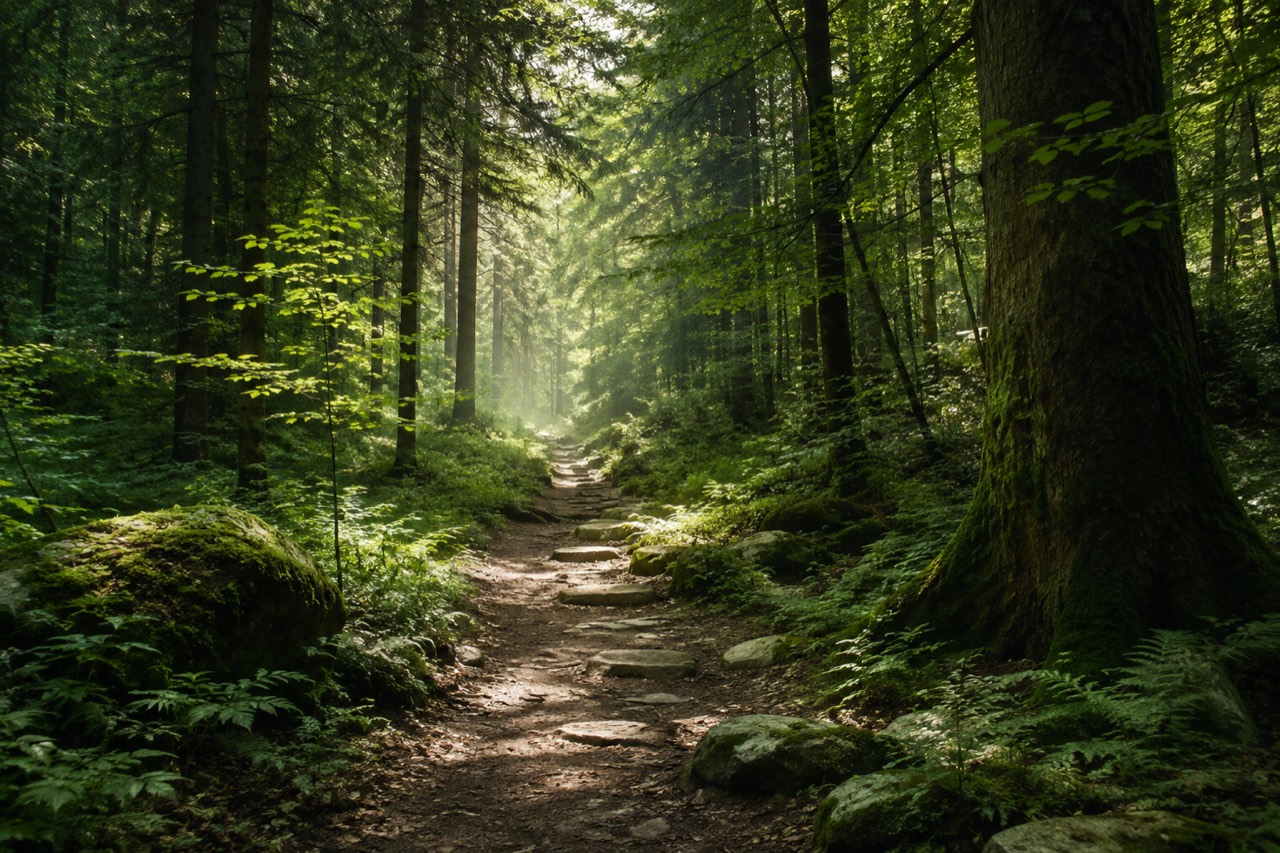
Walking into a forest with this mindset changes the scene. The forest is not merely a resource, a backdrop, or a collection of scenery. It is a living order that sustains lives, while also being made of lives.
You respect the chaotic balance of nature that sustains the whole. You recognize sentient beings as kin, fellow conscious travelers with a claim on their own lives. You see trees as elders and anchors of the community, holding the system together through shade, roots, habitat, memory, and relation.
This combined philosophy is grounding because it allows both intellectual reverence for the complexity of nature and emotional empathy for the individual living beings who inhabit it. Stepping back from relentless human-centered noise and attending to the rhythms of the non-human world is not only a philosophical preference. It is a way to restore sanity and remember how life is held together.